


🚀 Generative AI: Concepts, How It Works & The Future of Intelligent Creation
Generative AI is one of the most transformative technologies of our time, reshaping how we create, build, and interact with digital systems. From generating human-like text to creating images, music, and even software code, Generative AI is redefining the boundaries of innovation.
In this article, you’ll explore what Generative AI is, how it works, its types, real-world impact, challenges, and why it’s becoming one of the most important skills of the future.
🧠 What is Generative AI?
Generative AI is a branch of artificial intelligence that focuses on creating new content rather than simply analyzing data.
Unlike traditional AI systems that classify or predict, Generative AI can produce:
- Text
- Images
- Audio
- Video
- Code
- 3D designs
The term “generative” refers to the ability of AI systems to learn patterns from data and generate original outputs based on that learning.
This marks a major shift in AI—from analysis to creation.
⚙️ How Generative AI Works
Generative AI operates through a structured pipeline that transforms user input into meaningful output.
🔹 Step-by-Step Process:
- Prompt Input – User provides input (text, instruction, or query)
- Tokenization – Input is converted into numerical representations
- Neural Processing – Data flows through trained neural networks
- Attention Mechanism – Model identifies important context
- Token Prediction – Predicts next words or elements step-by-step
- Sequence Generation – Builds complete output progressively
- Safety Control – Applies filters and constraints
- Output Conversion – Converts tokens into readable content
- Post-processing – Improves formatting and quality
- Response Delivery – Final output is delivered to the user
This pipeline allows AI systems to generate outputs that feel intelligent, contextual, and creative.
🔍 Types of Generative AI Models
Different types of models power Generative AI systems, each designed for specific tasks:
🤖 Key Model Types:
- Autoregressive Models – Generate content sequentially (e.g., text generation)
- Transformer Models – Use attention mechanisms (e.g., GPT, BERT)
- Diffusion Models – Generate high-quality images and media
- GANs (Generative Adversarial Networks) – Create realistic synthetic data
- Variational Autoencoders (VAEs) – Generate data from latent space
- Flow-Based Models – Provide controlled and reversible generation
- Neural Language Models – Specialized for human-like text
- Multimodal Models – Handle text, images, audio together
- Foundation Models – Large pretrained models adaptable to many tasks
Modern AI systems often combine multiple approaches to deliver powerful results.
🤖 Generative AI vs Traditional AI
🔹 Traditional AI:
- Focuses on analysis and prediction
- Uses rule-based or statistical methods
- Works well for structured problems
- Limited ability to adapt or create
🔹 Generative AI:
- Focuses on creation and generation
- Uses deep learning and neural networks
- Learns from large datasets
- Produces human-like, creative outputs
👉 The shift from predicting outcomes → generating content is what makes Generative AI revolutionary.
⚠️ Challenges and Responsibilities
While Generative AI is powerful, it comes with important challenges:
🔴 Key Challenges:
- Data bias and fairness
- Hallucinations (incorrect outputs)
- Privacy and data security
- Ethical misuse (deepfakes, misinformation)
- Content safety and moderation
- Intellectual property concerns
- Environmental impact (high computation cost)
👉 Responsible AI development requires human oversight, transparency, and ethical design.
🚀 Future of Generative AI
The future of Generative AI is incredibly promising and transformative.
🔮 What’s Coming Next:
- Autonomous AI agents that act independently
- Personalized AI assistants for every user
- Human-AI creative collaboration
- Multimodal AI (text + image + video + audio)
- Real-time AI generation
- Edge AI (running locally on devices)
- AI-driven scientific discoveries
- Intelligent education systems
- Enterprise automation
Generative AI will become a core part of everyday technology, shaping how we work, learn, and innovate.
🎯 Why Learn Generative AI Now?
Learning Generative AI today is a future-proof decision.
💡 Key Benefits:
- High-demand global career opportunities
- Ability to build intelligent systems
- Faster software and product development
- Innovation in content creation
- Competitive advantage in tech industry
- Opportunity to shape future technologies
Generative AI combines:
👉 Programming + Machine Learning + Creativity + System Design
This makes it one of the most powerful and versatile skill sets in modern technology.
🌟 Final Thoughts
Generative AI is not just a trend—it’s a paradigm shift in how technology interacts with humans.
It transforms machines from tools that analyze data into systems that create, adapt, and innovate.
If you want to stay relevant in the future of technology:
👉 Start learning Generative AI today
Related Post
Welcome to OrbitOCP - Online Classroom Platform
🚀 Welcome to OrbitOCPEmpowering Skills for the Future of TechnologyIn a world where technology is evolving faster than ever, staying relevant requi
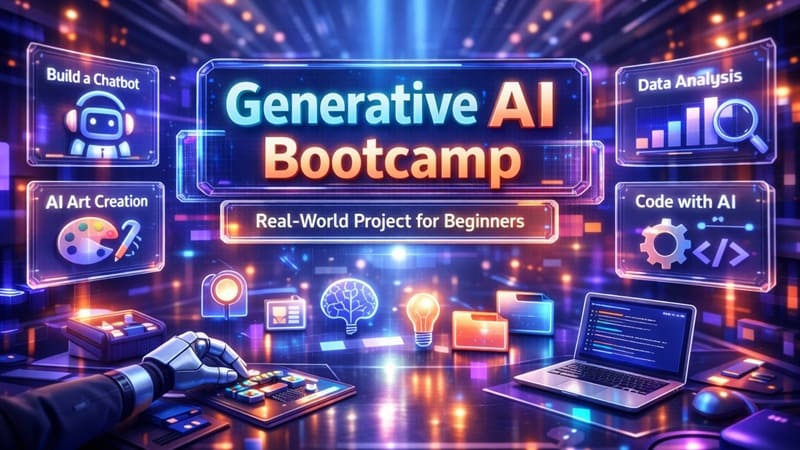
Generative AI Bootcamp: Real-World Project for Beginners
🚀 Generative AI Bootcamp: Build Real-World AI Projects from ScratchIn today’s rapidly evolving technological landscape, Generative AI (GenAI) is
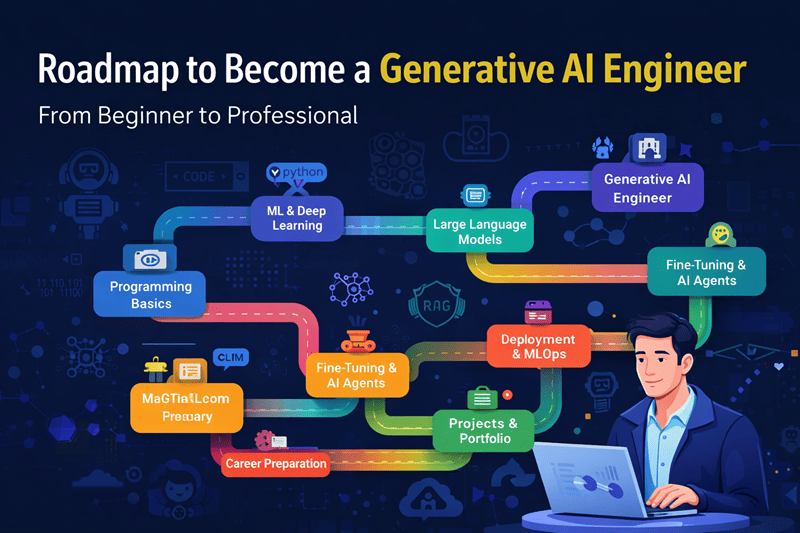
Roadmap to Become a Generative AI Engineer: From Beginner to Professional
🚀 Roadmap to Become a Generative AI Engineer: From Beginner to ProfessionalGenerative AI is one of the fastest-growing fields in technology, poweri

Generative AI in Practice: Models, Tools, and Real-World Applications
🚀 Generative AI in Practice: Models, Tools, and Real-World ApplicationsGenerative AI is no longer just a theoretical concept—it is actively trans

Source Code Management with Git, GitHub & Sourcetree: A Complete Practical Guide
🚀 Source Code Management with Git, GitHub & Sourcetree: A Complete Practical GuideIn modern software development, writing code is only one part of